Our approach

Building Confident Performers — Not Just Better Musicians

Learning the notes matters. So does what happens when it's time to share them.
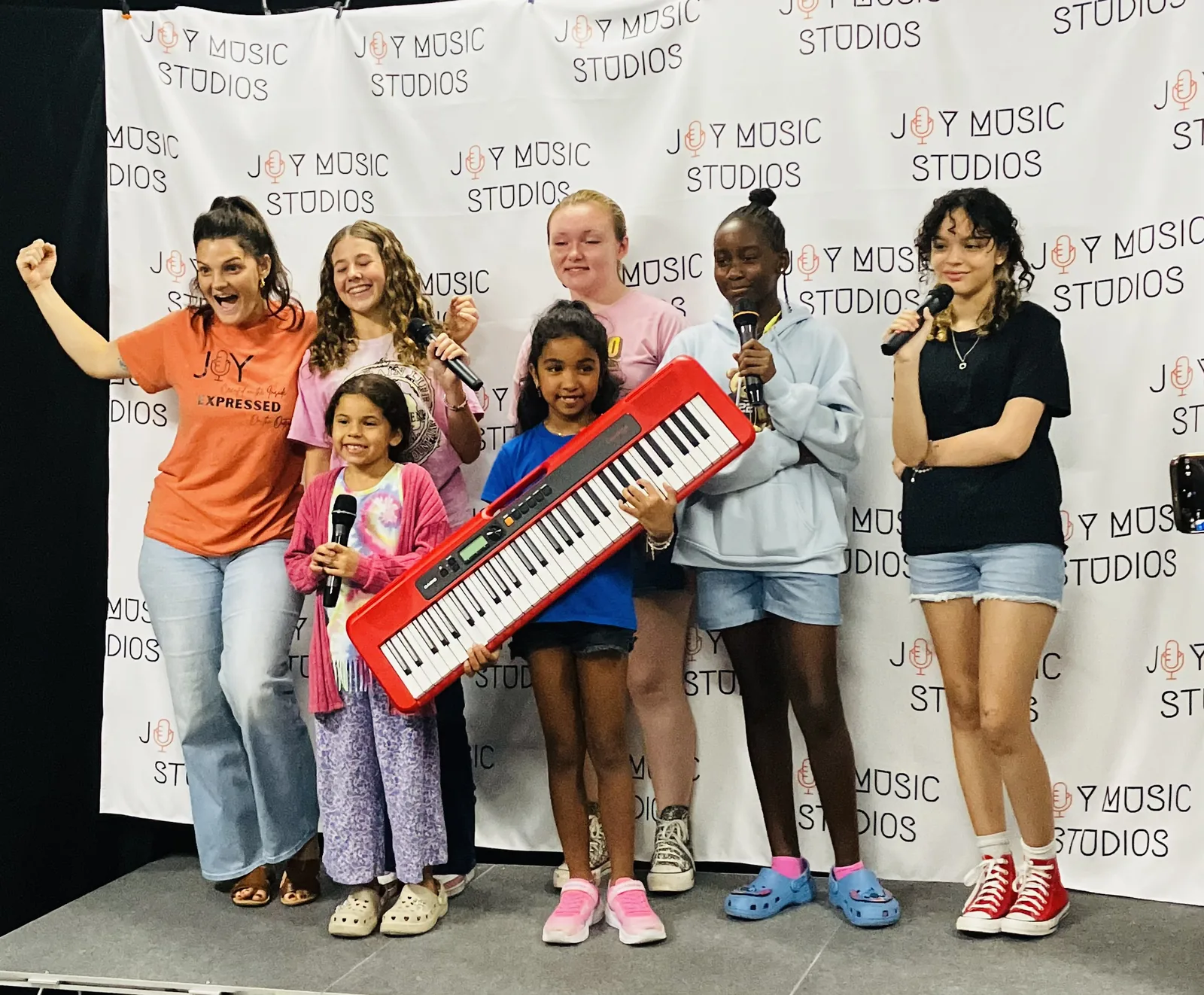
Students celebrating on stage after performing at a studio showcase

At Joy Music Studios, technical training and confidence development happen together.

Plenty of studios can teach the mechanics of an instrument. Fewer teach what happens next — the moment a student has to stand up, walk out and share what they've been working on. That moment is where students discover whether their training holds.

So we teach both. Students learn how to prepare, how to communicate, how to recover from a mistake mid-performance, how to express something real and how to connect with the people watching and listening. That's what we mean by the confident performer: not a program you sign up for, but the way every lesson and class here is taught.

Teaching philosophy

Four things we develop at the same time

Skill, confidence, expression and experience reinforce each other. Pull one out and the others weaken.

01

Skill

Strong technique creates freedom.

Technique isn't the opposite of artistry — it's what makes artistry possible. When the mechanics are secure, a student stops fighting the instrument and starts making choices. Instruction is sequential and specific to the discipline.

Piano

  • Rhythm and reading
  • Chords and scales
  • Coordination
  • Repertoire

Voice

  • Breathing and vocal health
  • Tone and range
  • Pitch
  • Control

Acting

  • Character and scene work
  • Movement
  • Storytelling
  • Audition skills

02

Confidence

Confidence isn't something students either have or don't have.

It grows — through preparation, encouragement and repeated experience. A student who has been well prepared, told the truth kindly and given real chances to perform will build confidence, even if they started out convinced they had none. Over time, students learn to:

  • Try difficult things before they feel ready
  • Perform even when nerves show up
  • Make a mistake and keep going
  • Receive feedback without deflating
  • Trust their preparation
  • Communicate with the people watching

03

Expression

Music and performance are forms of communication.

Correct notes are the beginning, not the point. A performance only lands when someone in the room feels something — and that requires a student who has decided what they want to say. We spend real time on that decision.

  • Personality

    What makes this student's version of the piece theirs.

  • Interpretation

    Choices about phrasing, pacing, dynamics and intent.

  • Emotion

    Feeling that reaches the back row honestly, not theatrically.

  • Storytelling

    Understanding what the song or scene is actually about.

  • Individual style

    A voice that sounds like them rather than an imitation.

04

Experience

Students need opportunities to use what they learn.

Skill practiced only in a lesson room stays theoretical. Performance opportunities — when they're available — are where classroom skills become genuine confidence. Offerings vary through the year, and the studio will always tell you what's coming up.

Recitals & showcases

Preparing for a date on the calendar changes how a student practices. Working toward a performance turns abstract practice into purposeful preparation.

Productions & group work

Rehearsing with others teaches listening, timing, responsibility to a team and the discipline of showing up prepared for people who are counting on you.

Studio & community moments

Smaller, lower-stakes chances to play or perform for others build the repetitions that make bigger stages feel manageable.

See what's currently on the calendar on our events page.

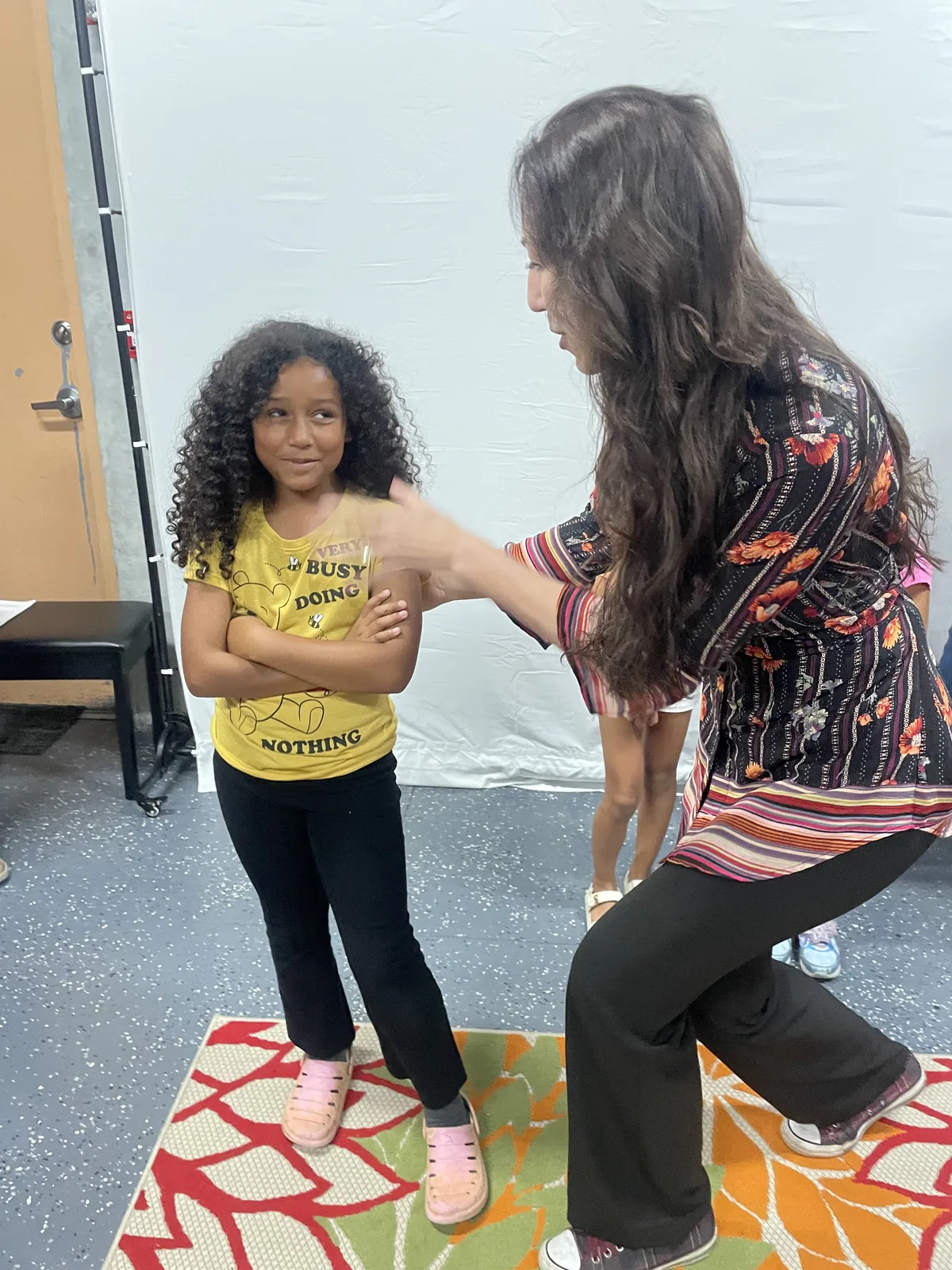
Instructor coaching a young student through an acting exercise

Where this comes from

Alecia's philosophy

Joy Music Studios was founded by Alecia Fiechter, and the studio's approach grew directly out of her own experience as a student and performer.

The teachers and mentors who shaped her weren't only the ones who corrected her technique. They were the ones who told her she could do it, that she had what it took, and that they believed in her. That kind of belief, offered consistently, changes what a young performer is willing to attempt.

Alecia also believes music is one of the most important tools we have for relating to and communicating with other people. A student who learns to say something through a song or a scene has learned something that reaches far past the recital — into friendships, classrooms, interviews and every room they walk into afterward.

Our brand philosophy

Joy.
Created on the inside,
expressed on the outside.

Joy isn't a performance note — it's what develops in a student who has been encouraged, equipped and given something worth sharing. Everything visible on stage starts as something built quietly, week after week, in the studio.

Experience the Joy Music Studios Approach

The best way to understand how we teach is to sit in on a class and see it happen.

Explore by age: Musikgarten, Kids 6–12, Teens & Adults and Homeschool.

Save a Free Class Spot